Coenzyme Q10, (AKA CoQ10 or ubiquinone by the fancy pants’) has received quite a bit of attention in recent years. It’s mostly touted by fitness and longevity guru’s as being absolutely *essential* to cellular health and longevity.
That is certainly a STRONG claim and its often mentioned as a quick talking point.
Today we’ll dig in deep behind what makes it work and give you the information to decide if it’s worth it for you.
Introduction to CoQ10

The history of Coenzyme Q10, Aka “CoQ10” starts in the late 50’s where it was discovered by Dr. Frederick Crane and his group of colleagues at the University of Wisconsin.
Initially isolated from beef heart mitochondria (aka the powerhouses of the cell), the compound was identified as essential for energy production.
Afterwards, their research showed some promise of its potential therapeutic applications, particularly in the terms of cardiovascular health.
Early medical applications of CoQ10 included its use in attempts of treating congestive heart failure and other cardiac conditions. They noted very heavily in its ability to improve cellular energy production and how it acts as an antioxidant.
So, yes it is actually a VITAL part of daily life and our body NEEDS it, but let’s look more into it’s production and utility as a supplement later.
Upon further digging, researchers found that CoQ10 has an integral role in the production of cellular energy, operating primarily within the mitochondria (no surprise there.. but the level of significance was further confounded.)
Researcher further elucidated that Its primary function is to facilitate the conversion of nutrients into adenosine triphosphate (ATP), which is the molecule that cells use for energy. (Again think of
“ATP = energy currency” from your science classes.)
From a chemical standpoint, CoQ10 is a quinone, a type of organic molecule that participates in oxidation-reduction reactions.
This redox capability (click link to learn more about those at your own leisure) is central to its role in the electron transport chain within the mitochondria, where it helps generate ATP by transferring electrons.
Its structure includes a benzoquinone ring and an isoprenoid side chain, which allows it to exist in both oxidized (ubiquinone) and reduced (ubiquinol) states. (we will touch more on these later.)
It’s known not only for its part in cellular energy metabolism, but also for its broader touting as providing an array of health benefits. This includes, but CERTAINLY IS NOT LIMITED TO its potential to support cognitive function, reduce oxidative stress, and promote overall longevity, all of which I will expand on below.
What does CoQ10 do?

One of its most significant health benefits is its positive impact on cardiovascular health. Scientific studies have shown that CoQ10 can improve the efficiency of energy production in heart cells, likely leading to overall better heart function. For instance, a clinical trial published in the “European Heart Journal” demonstrated that patients with heart failure experienced significant improvements in heart function and a reduction in hospitalizations when supplemented with its standard formation.
It’s likely to be noted that its antioxidant properties help to reduce oxidative stress, which is a strong factor in the development of heart disease.
We’ll be touching on a LOT of benefits that the antioxidant properties have to show some level of benefit for in a myriad of area’s so stick around if you are interested in it’s general utility!
In addition to heart benefits, CoQ10 has been mentioned to enhance physical performance. While it’s not one of the top 10 supplements most athletes would normatively deploy in their training, it’s sometimes brought up as a factoid, so it’s nonetheless important to mention that reportedly athletes have less exercise-induced muscle damage and quicker recovery times when taking it..
Also a cool insight is it’s potential in combating neurodegenerative diseases like Parkinson’s and Alzheimer’s has been a focus of recent research. A clinical trial in the “Archives of Neurology” indicated that high doses of CoQ10 could slow the progression of Parkinson’s disease by improving mitochondrial function and reducing oxidative stress. These findings suggest that perhaps It could be a valuable supplement for supporting long-term brain health.
CoQ10, Longevity, & Becoming a Vampire! (Not really)
CoQ10 functions as a potent antioxidant, combating free radicals and preventing cellular damage that accelerates the aging process. By promoting cellular repair, it aids in maintaining not just healthy cell function but also a possible acute method of slowing down the natural aging process.
Of note for some people, research conducted on rodents (Frowny face) has shown that supplementation with CoQ10 can lead to a notable increase in lifespan. These findings were later supported by some studies on human subjects, that revealed that higher levels of CoQ10 are often associated with improved health markers and extended lifespan. The correlation between elevated CoQ10 levels and longevity shows an importance of maintaining sufficient levels for general longevity purposes, however it’s not to state that taking CoQ10 supplements WILL make everyone live longer and healthier lives, but rather having a sufficient amount is the imperative.
Also, kind of interesting, CoQ10 has been linked to better skin health, a key indicator of aging (hence why I mention the vampire part!)
By reducing your oxidative stressors and it’s capabilities of promoting collagen production, CoQ10 can aid in some part of modestly decrease the appearance of wrinkles and fine lines, leading to a more youthful and vibrant complexion for some (in tandem with healthy lifestyle factors ofcourse!)
Dosage Recommendations
I’ll make this portion a TL;DR (as well as put it in the FAQ, before giving more Nuance)
General anti-oxidant benefits: usually 30-100mg per day
Cardiovascular benefits: 100-200mg per day
Studies noting above 300mg to the ranges of 1200mg are often in clinical settings, please do not interpret ANY information on this blog as a substitute for medical advice.
The lowest effective dosage to elicit health benefits typically starts at around 30 mg per day. For general health maintenance, a daily intake of 30-100 mg is generally sufficient. However, specific health conditions may necessitate higher dosages.
For cardiovascular health, a common recommendation is 100-200 mg per day.
This dosage has been shown to support heart function, reduce oxidative stress, and improve symptoms in individuals with heart disease.
As I alluded to earlier, In cases of chronic conditions such as Parkinson’s disease or migraines, healthcare providers might recommend even higher doses. For instance, individuals with Parkinson’s disease may benefit from dosages ranging from 300-1200 mg per day, though such high doses should only be taken under medical supervision.
Several factors influence the appropriate dosage of CoQ10, including age, health status, and concurrent medications (please ALWAYS look for interactions with your medications and consult with medical professionals as well).
Anyone with medically relevant health conditions or taking medications that deplete CoQ10, such as statins for cholesterol management, might also require higher doses.
Again, TALK TO YOUR DOCTOR first. Don’t just go off a blog-post to swap or lowering your medications.
Is there a Difference between CoQ10, ubiquinone, and ubiquinol?
In Short, Yes!
CoQ10 is the Colloquial name for ubiquinone, it’s easiest to think of them as the same thing.
it is the standard, oxidized, typically more shelf stable variant of the two versions available on the market.
Ubiquinone is what you would you would find as the more affordable option in most stores and in normative populations has little significant difference in the average user supplementing.
Ubiquinol is the “Active” (reduced form) of CoQ10.
Ubiquinol is often touted as the best version because it is easier to absorb and is also able to ameliorate low levels of CoQ10 in individuals who have difficulty in reaching satisfactory levels via other means.
Important note as well, you need both forms in your body and you’ll be able create it in either form normally.
Affiliate Link: Recommended Brand for CoQ10
If you want amazing quality, I strongly encourage you guys to check out NootropicsDepot for their HIGH Bioavailabilty CoQ10 formulation(S), plural. Click the photo to view my ND’S CoQ10 Capules.
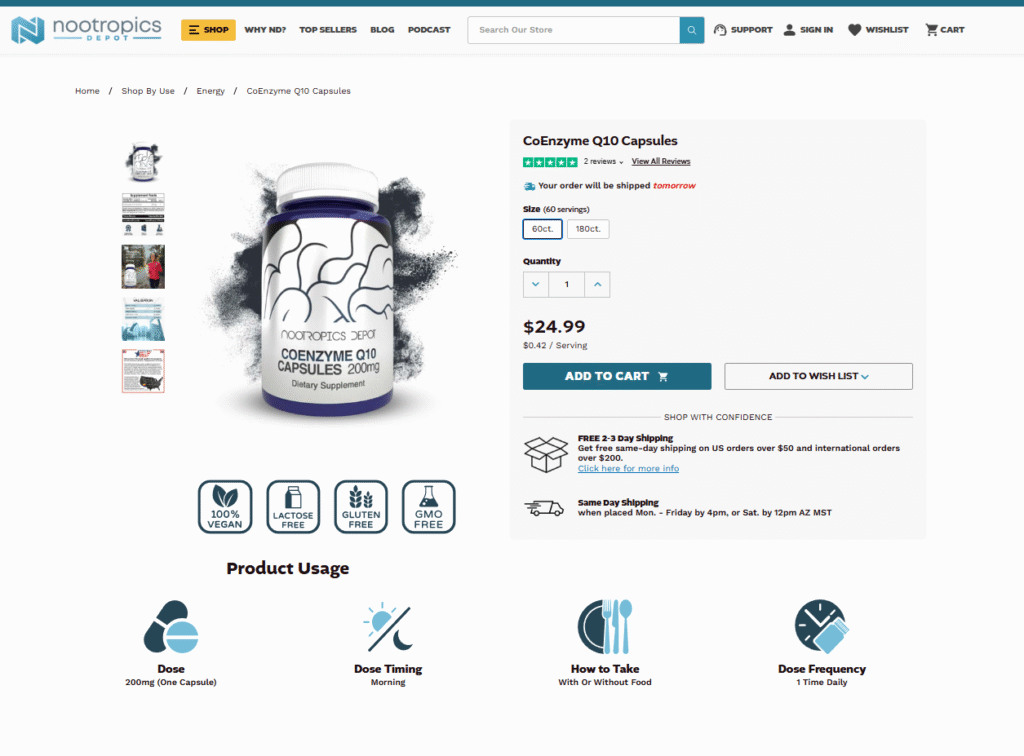
They have soft gels as well as the capsules linked above as well.
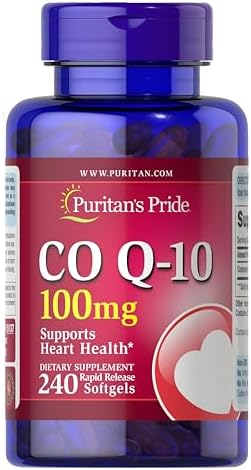
Additionally, You are more than welcome to browse Amazon for CoQ10 supplements; INFACT I’ll make it very easy for you here to price-match with Amazon’s Best-Sellers for CoQ10


Wrapping UP and Citations
Now that i’ve given you SOME of the significant benefits of CoQ10 for health and longevity maybe you can make a slightly more informed decision. Now you know it plays a crucial role in cellular energy production, heart health, and overall well-being, woo!
Integrating more CoQ10 into a balanced and healthy lifestyle can provide numerous advantages. However, it is essential to remember that individual needs may vary. Therefore, consulting with healthcare professionals before beginning any new supplement regimen is paramount to ensuring safety and efficacy.
If you want to learn more, here are a few items to read that’ll provide a bit of additional benefit in your researching endeavours!
1. Littarru, G. P., & Tiano, L. (2007). Clinical aspects of coenzyme Q10: An update. *Nutrition*, 23(7-8), 722-733. doi:10.1016/j.nut.2007.04.014
2. Bhagavan, H. N., & Chopra, R. K. (2006). Coenzyme Q10: Absorption, tissue uptake, metabolism and pharmacokinetics. *Free Radical Research*, 40(5), 445-453. doi:10.1080/10715760600617843
3. Molyneux, S. L., Young, J. M., Florkowski, C. M., Lever, M., & George, P. M. (2008). Coenzyme Q10: Is there a clinical role and a case for measurement? *Clin Biochem Rev*, 29(2), 71-82.
As always, knowledge and professional guidance are key to unlocking the full potential of any health supplement.
If you want to learn more about supplements in general, feel free to click here!
If there is a specific purpose you have in mind that you’d like to use a supplement for, this link is for you!
Everything from Heart, Liver, Skin, or Men/Women focused products they are all slowly getting updated and covered!
FAQ Section:
What is CoQ10 and what does it do?
CoQ10 is a molecule found in the mitochondria responsible for overall health and longevity.
What are the benefits of CoQ10 supplementation?
CoQ10 can be of benefit for overall anti-oxidant properties, energy production, as well as being a decent supplement for heart health for some.
What is the recommended CoQ10 dosage?
Dosages vary, but normatively anywhere from 100-300mg is common for most.
What is the best time to take CoQ10?
Ideally at a consistent time daily would be best practice.
Should CoQ10 be taken with food?
Yes, CoQ10 is best absorped when taken with food.
What is the difference between ubiquinone and ubiquinol?
Ubiquinone is that standard form, ubiquinol is the “active” version.
How long does CoQ10 take to work?
CoQ10’s benefits are dependent on what you are using it for. If taking for any reason other than general well-being it is best discussed with your Doctor.
What are the side effects of CoQ10 supplements?
Nausea, headaches, insomnia and possible dizziness are some of the notable side effects (though more can be present if taking medications as well)
Can you take CoQ10 every day?
Yes, you can take CoQ10 every day.
Does CoQ10 interact with medications?
YES! CoQ10 has noted interactions with MANY medications, especially statins.